- tyler@shipplate.com
- +86 15603721115
Steel sheet piles are hot-rolled (or cold-drawn) steel channels with interlocking joints or shafts. These interlocking joints or shafts create a continuous steel sheet pile wall, used for retaining soil and water. They offer advantages such as high strength, lightweight, easy construction, environmental friendliness, aesthetic appeal, and recyclability.
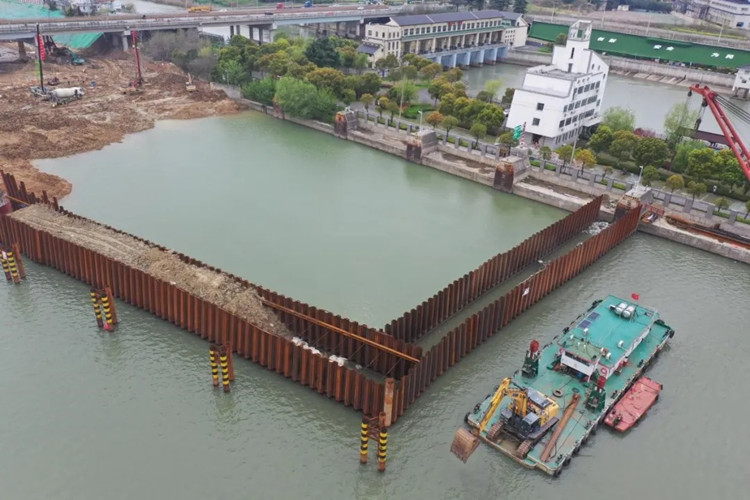
Steel sheet pile structures can be categorized into two types based on their application: permanent and temporary. Permanent structures are primarily used in projects such as ports, dock walls, riverbanks, and road slope protection. Temporary structures are often used in foundation construction for projects such as multi-story buildings, highway bridges, and water conservancy projects. The steel sheet piles can be removed after construction is complete.
In Chinese port projects, steel sheet piles are primarily used in two main categories: replacing concrete sheet piles as the mainstay of the port structure, and forming a dry construction site in offshore structures. In previous projects, steel sheet piles were primarily used for retaining soil and water, while also providing wave protection. The construction process detailed in this article uses steel sheet piles as a primary wave barrier, effectively acting as a temporary vertical breakwater. This is a first for China, and other projects with similar design requirements could be emulated.
