- tyler@shipplate.com
- +86 15603721115
Signs of damage to steel sheet piles include light brown rust and rust holes. Most rust holes appear as rust holes. Rust holes vary in size, ranging from 50 mm x 50 mm to 300 mm x 500 mm.
Rust primarily occurs in the center of the steel sheet pile. Due to long-term corrosion, the steel sheet piles above the rust holes are severely rusted, forming layers of dark brown rust flakes. Hammering the top of the rust hole tends to expand the hole's area, and the 100 mm thick steel plate above the hole is no longer viable. Rust holes are found on the seaward side of the steel sheet piles, while no rust is observed on the landward side or the surface of the lock.
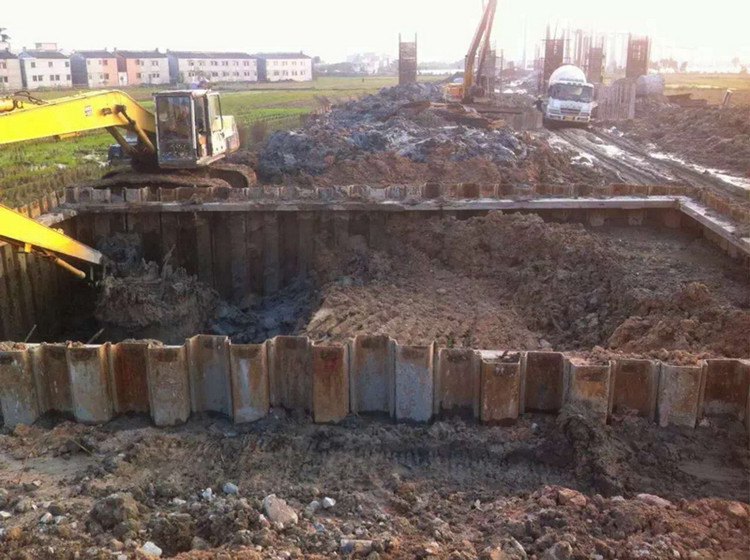
To understand the rusting of steel sheet piles below the mud surface, a foundation pit was excavated on-site to a depth of 1.0m below the mud surface. Excavation revealed that the backfill or sediment in front of the rust holes in the steel sheet piles consisted of sand, gravel, and slag. The steel sheet piles below the mud surface also showed some rust, with a layer of rust covering the surface. Hammering was used to remove the rust, revealing thick silver steel plates with high compressive strength. The thickness of the steel sheet piles gradually increased from top to bottom, with the ideal thickness at the edge of the hole being approximately 6.0mm, widening to 12mm downwards.
In high-width locations, rusting of the steel sheet piles occurred primarily within the tidal range. Because the steel sheet piles consist of a cap beam at the top and are inserted into the roadbed below, the exposed portion ranges from 0.5 to 1.5m in height. This section of steel sheet piles is fully exposed to the air during low water levels and completely submerged in the sea during high water levels.
The visible drainage holes in the steel sheet piles continue to drain water. Some rust holes in the steel sheet piles are caused by expansion of these holes. At low tide, the rust holes drain outward, exposing a portion of the backfill behind the wall. No relative movement of the steel sheet pile locks was observed on site, indicating that the damaged steel sheet piles have not caused significant uneven ground settlement.
