- tyler@shipplate.com
- +86 15603721115
Sheet piles are used to create retaining structures with varying surface levels. Sheet piles form vertical interfaces. Sheet piles are used for both temporary and permanent retaining walls. Structures include basements, underground car parks, and bridge abutments, including integral bridges.
In the UK, three configurations, designated U, Z, and straight web, are available. They are primarily manufactured as hot-rolled sections, but cold-formed sheet piles are also available.
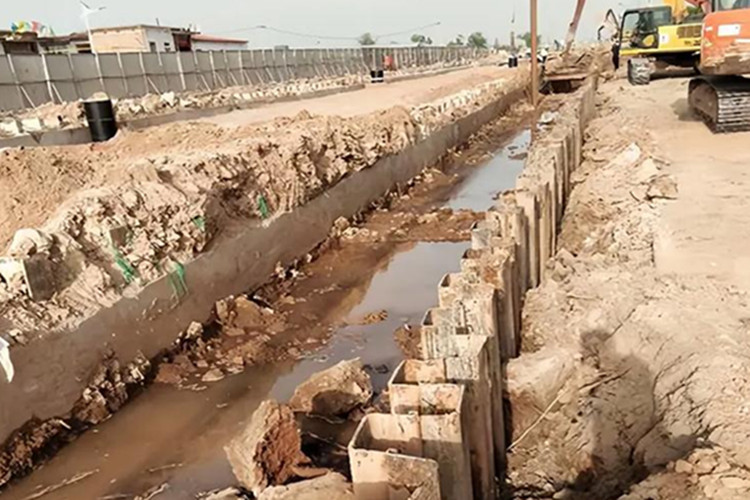
Z-web sheet piles are used in medium-depth wall construction as they are considered the most efficient type of sheet pile. They are commonly used in cantilever and post-retaining wall systems.
U-web sheet piles are used in similar applications to Z-web sheet piles. However, because the interlock between adjacent sheet piles is located at the neutral axis of the cross-section, their flexural strength is lower than that of comparable Z-web sheet piles. Straight web sheet piles are designed to form cylindrical structures, usually closed, retaining soil backfill. Generally, they are used where the piles are subject to tensile forces, so interlocking strength is paramount. They include honeycomb cell structures (cofferdams) and diaphragm cell structures.
Cold-formed U- and Z-shaped sheet piles are also manufactured, but they are primarily used to reinforce dams and river or canal banks. They are also used as containment barriers for contaminated land and as noise barriers when a sound-absorbing surface layer is attached to the front of the piles. Cold-formed trench sheet sections can be used as an alternative to U- and Z-shaped sheet piles in cases where excavation depths are smaller. These projects include sewage and drainage projects, particularly temporary works sheathing.
