- tyler@shipplate.com
- +86 15603721115
Steel sheet piles are sections of sheet material with interlocking edges that are driven into the ground to provide earth retention and excavation support. Steel sheet piles are typically made of steel, but can also be made of wood or reinforced concrete. Below, we'll explain the different types of steel sheet piles.
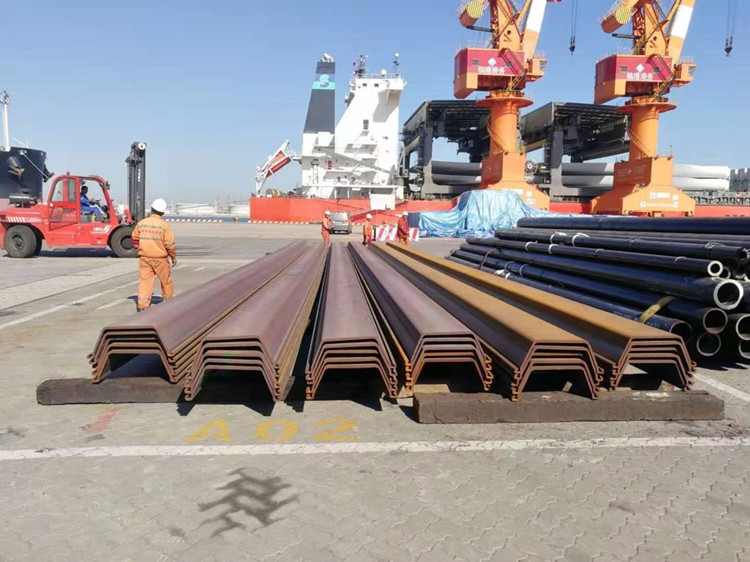
Different Types of Sheet Piles
1. Steel Sheet Piles
Steel sheet piles are available in a variety of cross-sections and shapes. They can be hot-rolled, cold-rolled, or cold-bent. The durability of steel sheet piles is enhanced by corrosion protection measures such as coatings and cathodic protection. Steel is a common form of sheet pile because it offers good resistance to high driving stresses, excellent watertightness, and can be welded or bolted to increase length. They are connected by interlocking. Steel sheet piles come in four basic forms: plain, straight-web, box, and composite.
Vinyl Steel Sheet Piles
A cost-effective alternative to steel sheet piles for bulkheads, seawalls, and cut-off walls. They also outperform alternative materials such as concrete and wood. The primary advantage of vinyl steel sheet piles is their excellent corrosion resistance and resistance to oxidation when exposed to seawater.
2. Timber Sheet Piles
These are used for temporary structures and support slabs in excavation projects. If used in permanent structures above the groundwater level, they should be treated with some form of corrosion protection. Even with corrosion protection, timber sheet piles have a short lifespan and are connected using tongue-and-groove joints. Timber piles are not suitable for ground composed of gravel and boulders.
3. Concrete Sheet Piles
These are typically connected using tongue-and-groove joints. They are commonly used in permanent riverbanks, canals, and other marine structures. The toe of the pile is usually beveled to facilitate driving and interlocking, while the pile head is completed with a cast capping beam. These precast concrete elements are typically connected using tongue-and-groove joints. They are relatively heavy and bulky, and they displace a large amount of soil during driving. This large displacement increases driving resistance. Handling and driving should not damage the piles, and appropriate reinforcement must be provided.
