- tyler@shipplate.com
- +86 15603721115
Yes, sheet piles offer a very high level of reusability, which is one of their greatest economic and environmental advantages. In fact, the global sheet pile industry relies heavily on a mature market for rental and reuse, particularly for steel sheet piles.
However, reusability depends on the material, installation method, soil conditions, and extraction method. Below is a detailed analysis of sheet pile reusability:
1. Reusability by Material
1) Steel Sheet Piles (Highly Reusable): Steel is the most common and highly reusable material. High-quality steel (such as ASTM A572 or S355 grades) can be driven, extracted, refurbished, and reused five to ten times—or even more—without losing structural integrity. At the end of their service life, the steel is 100% recyclable.
2) Vinyl/PVC Sheet Piles (Moderately Reusable): Commonly used in revetment and seawall projects. They can be extracted and reused but are more susceptible to UV degradation, impact damage during extraction, and embrittlement over time.
3) Composite Sheet Piles (Limited Reusability): Fiberglass or wood-plastic composites are typically designed for permanent installation. While they can be extracted, they are more prone to cracking or delamination during the process.
4) Timber Sheet Piles (Rarely Reused): Timber is generally considered a single-use or limited-use material due to its susceptibility to rot and marine borers, as well as its high tendency to split during extraction.
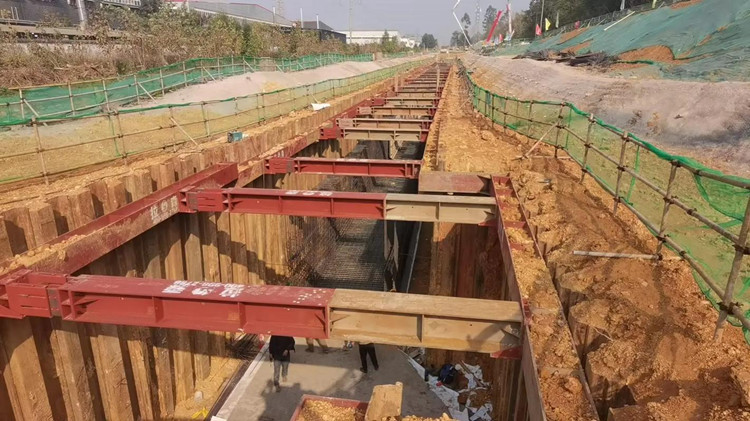
2. Extraction Process
To reuse sheet piles, they must be extracted intact. This is typically achieved using the following method:
1) Vibratory Hammer: The most common method. A vibratory hammer equipped with a specialized extraction clamp is attached to the top of the pile. The vibration liquefies the surrounding soil, breaking the skin friction between the soil and the pile, thereby allowing the pile to be extracted smoothly. 2) Impact hammer: When a pile becomes stuck and difficult to extract, an impact hammer can be used in conjunction with a vibratory hammer; the impact breaks the bond between the pile and the soil.
3) Water jetting: High-pressure water is sprayed downwards along the pile shaft to scour the surrounding soil and reduce friction, thereby facilitating the extraction process (particularly in dense sand or clay layers).
4) Pre-loosening: For piles that have been embedded for a long time, contractors may drive a smaller "guide pile" next to the target pile to break the soil bond before attempting extraction.
3. Factors affecting reusability
Not all steel sheet piles remain intact during extraction. The following factors influence the feasibility of their reuse:
1) Soil conditions:
* Sand and gravel: Generally easy to extract.
* Stiff clay: Can create strong vacuum or suction effects, making extraction difficult and increasing the risk of steel stretching or tearing.
* Rock: As previously mentioned, if steel sheet piles are pre-drilled and grouted into rock, they are effectively permanently bonded. Extracting such piles is usually not economically viable and carries a high risk of severe damage.
2) Duration of embedment: The longer steel sheet piles remain underground (especially in corrosive environments like saltwater), the more severe the corrosion. Severe corrosion reduces wall thickness and weakens the strength of the interlocks.
3) Installation damage: If excessive force is used during driving, or if the pile strikes underground obstacles or is installed out of plumb, the interlocks may stretch, tear, or "unzip" (disengage), rendering the pile unusable.
4) Permanent concrete pile caps: If a concrete waler or pile cap has been cast over the top of the steel sheet piles, the concrete must be carefully cut or chipped away before extraction; this process can potentially damage the upper section of the pile.
4. Refurbishment: Preparing for Reuse
After extraction, steel sheet piles are typically not put back into service immediately; instead, they undergo a refurbishment process to ensure they meet the engineering standards of the next project:
1) Cleaning: High-pressure water jetting or sandblasting is used to remove soil, marine growth, and rust.
2) Straightening: Heavy machinery is used to restore piles that were bent or deformed during driving or extraction to their original shape.
3) Interlock Repair: This is the most critical step. Damaged interlocks are cut off and new sections welded on to ensure a tight, watertight connection during the next installation.
4) Cutting/Welding: Piles exceeding the length requirements of the next project are cut to size. Conversely, shorter usable pile sections can (subject to project approval) be welded together to create longer piles.
5) Coating: If the equipment is to be placed in a corrosive environment, new protective coatings, epoxy coatings, or cathodic protection anodes are applied.
5. Economic and Environmental Benefits
1) Cost Savings (Rental Model): Due to their high reusability, most contractors choose to rent rather than purchase steel sheet piles. Rental fees are typically calculated on a weekly or monthly basis, plus a one-time "refurbishment" or "wear and tear" fee. This model significantly reduces upfront capital investment for temporary works such as bridge cofferdams or excavation shoring.
2) Sustainability: Steel sheet piles have a very low carbon footprint when reused. The steel industry promotes them as a "green" construction solution because they avoid the use of large quantities of concrete (which has high CO2 emissions), and the steel itself can be recycled indefinitely after its decades-long service life.
Conclusion
Steel sheet piles are designed from the outset to support multiple reuses. Their characteristics—driving, extraction, refurbishment, and redeployment—make them one of the most cost-effective and environmentally advantageous solutions for earth retention and water cutoff in civil engineering. However, successful reuse requires careful planning of the extraction process and thorough inspection and repair afterward.
