- tyler@shipplate.com
- +86 15603721115
Sheet piles are structural profiles featuring interlocking edges that are driven into the ground to provide earth retention, excavation support, or water barriers. They can be manufactured from various materials, with the specific choice depending on the project's structural requirements, environmental conditions, and whether the installation is temporary or permanent.
Common materials for sheet piles include:
1. Steel:
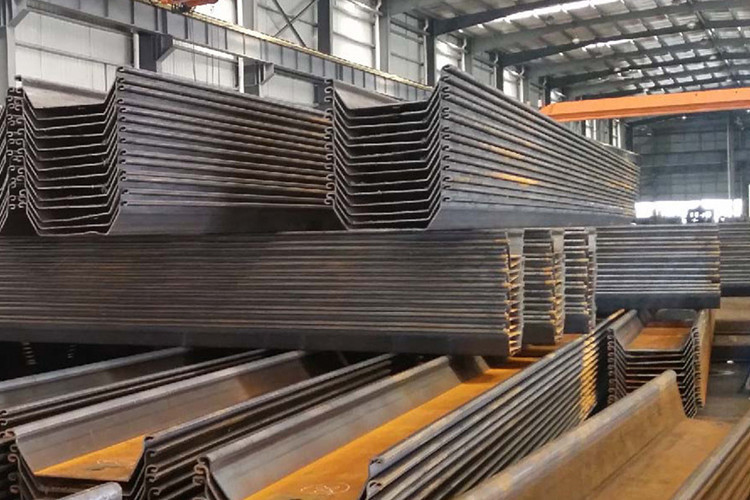
Steel is the most widely used material for sheet piling. Available in both hot-rolled and cold-formed varieties, it is favored for its high strength, durability, and ability to be driven into dense soils. Additionally, steel sheet piles are recyclable and reusable after their initial service life, making them a sustainable choice for many construction projects.
2. Vinyl (PVC):
Vinyl sheet piles are made from polyvinyl chloride (PVC) or similar composite materials. Lightweight, easy to handle, and highly corrosion-resistant, they are ideal for light-duty applications, landscaping, and small-scale water retention projects.
3. Timber:
Timber has traditionally been used for sheet piling, sometimes processed into "Wakefield" style piles (constructed by joining three flat planks). While cost-effective for temporary shoring or light earth retention, timber is less common in modern heavy construction due to its susceptibility to rot and lower structural load-bearing capacity.
4. Reinforced Concrete:
Precast reinforced concrete sheet piles are used when significant self-weight and long-term durability are required. They are frequently employed in permanent marine structures or heavy-duty retaining walls, where the ability to withstand heavy loads and environmental degradation is critical.
5. Aluminum:
Aluminum sheet piles are significantly lighter than steel versions and exhibit excellent corrosion resistance in marine and chemical environments. However, due to lower overall strength compared to steel, they are typically reserved for temporary shoring, small-scale excavations, or light-duty retaining walls.
6. Fiberglass/Fiber-Reinforced Polymer (FRP):
FRP composite sheet piles are increasingly used in harsh environments, such as for seawalls, flood defense systems, and waterfront projects. They possess an exceptionally high strength-to-weight ratio and are completely corrosion-resistant; furthermore, their installation requires only small-scale equipment, thereby minimizing disruption to the construction site.
Selecting the Right Material:
The choice of sheet pile material depends on various factors, including required structural strength, the degree of exposure to corrosive environments (such as saltwater or chemicals), the structure's intended service life (temporary or permanent), and budget constraints. Steel remains the industry standard for heavy-duty applications and deep excavation projects, whereas vinyl, aluminum, and FRP serve as excellent alternatives for specialized uses or highly corrosive environments.
