- tyler@shipplate.com
- +86 15603721115
It is generally neither recommended nor feasible to drive steel sheet piles directly into a hard, intact rock stratum using standard impact or vibratory hammers. Attempting to do so would almost certainly result in severe damage to the pile toe, failure of the interlocks, and catastrophic failure of the driving equipment.
Consequently, when encountering a rock stratum, geotechnical and civil engineers employ specialized methods to install steel sheet piles. The choice of method depends on the depth of the rock, the rock type (e.g., soft shale versus hard granite), and the required watertightness or structural load-bearing capacity.
The following are standard methods for installing steel sheet piles into or embedding them within a rock stratum:
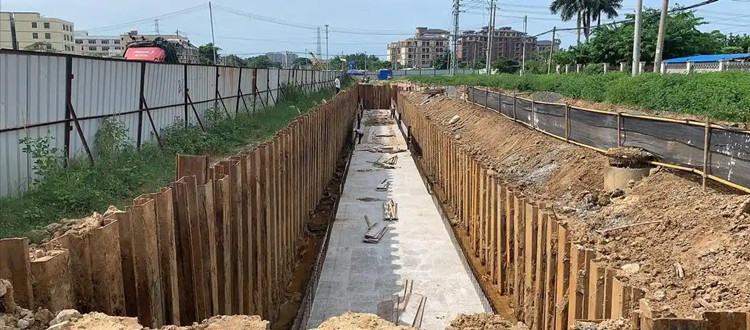
1. Pre-drilling (Rock Socketing)
This is the most common and reliable method for embedding steel sheet piles into hard rock.
1) Construction Process: A drilling rig (such as a down-the-hole hammer or rotary drill) is used to drill a continuous trench or discrete holes into the rock until the design depth is reached. The width of the drilled opening is typically slightly larger than the cross-sectional dimensions of the steel sheet pile.
2) Installation: The steel sheet pile is placed into the pre-drilled opening or lowered into it using slight vibration.
3) Grouting: Once the pile is in position, a cement-based grout is injected into the annular space between the pile and the rock (usually via the tremie method). This grout bonds the pile to the rock, provides structural stability, and creates a watertight seal at the interlocks.
2. Rock Slotting (Sawing or Milling)
If the rock is at a shallow depth (typically less than 10 to 15 feet), a trench can be cut directly into the rock surface prior to pile installation.
1) Construction Process: A specialized rock slotting machine (equipped with a diamond chain or heavy-duty rock milling wheel) is used to cut a narrow slot into the bedrock to the design depth.
2) Installation: The steel sheet pile is driven or vibrated into the pre-cut slot. Since the rock has already been removed, the resistance encountered by the pile is minimal. 3) Backfilling: Subsequently, lean concrete or grout is used to backfill the trench, sealing the interlocks and anchoring the piles into the base layer.
3. Driving into weathered or soft rock
If the material classified as "rock" is actually highly fractured, weathered, or very soft (such as soft shale, weathered sandstone, or soft limestone), direct driving may be possible, provided significant adjustments are made:
1) Reinforced pile shoes: Weld a specially designed tungsten carbide-tipped shoe to the bottom of the sheet pile to prevent the steel from curling, tearing, or deforming at the tip (mushrooming effect) under impact.
2) Heavy-duty sections: Use thicker, heavier steel sections (e.g., AZ or PU series with thicker webs) to withstand high driving stresses without buckling.
3) Reduced driving energy: Operators must use low-energy impact hammers with strict control to avoid the pile becoming stuck due to rock fragmentation; alternatively, use high-frequency, low-amplitude vibratory hammers to drive the pile into the fractured rock layer through a "friction" effect.
4. Controlled blasting (pre-splitting)
In rare cases where the rock is moderately hard but too deep to excavate a trench, controlled blasting (pre-splitting) may be used to pre-fracture the rock along the sheet pile alignment.
1) Construction method: A row of closely spaced blast holes with small explosive charges is arranged and detonated along the planned alignment, creating a fracture plane within the rock mass.
2) Installation: The sheet piles are then driven into this pre-treated, weakened zone.
3) Precautions: This method carries high risk, as shockwaves can still damage the pile interlocks, and it requires strict environmental and safety controls. Currently, this method is increasingly being replaced by mechanical rock slotting and pre-drilling techniques.
Key considerations for construction in rock layers
1. Interlock protection: The interlock (the connecting edge of the sheet pile) is the weakest part of the entire system. If the interlock is damaged during construction in rock, the wall will lose its structural continuity and watertightness.
2. Verticality: Pre-drilled holes must remain strictly vertical (or align with the design inclination). If the borehole deviates, the steel sheet piles will fail to align, causing the interlocks to jam during insertion.
3. Watertight Sealing: Simply placing the pile into the rock socket does not guarantee watertightness. For cofferdam or cutoff wall projects, grouting of the annular gap and the interlocks is usually required.
Alternatives to Steel Sheet Piles in Rock
If the rock layer is too shallow or excessively hard, or if the project budget cannot accommodate the cost of pre-drilling or pre-slotting, engineers often forgo steel sheet piles in favor of other shoring or seepage control systems:
1. Secant Pile Walls: Constructed by drilling directly into the rock using heavy-duty rotary drilling rigs to form interlocking concrete piles.
2. Slurry Walls (Diaphragm Walls): Trenches are excavated into the rock using hydraulic grabs or milling wheels while maintaining stability with bentonite slurry; reinforcement cages are then installed, followed by concrete pouring.
3. Concrete Cutoff Walls: Narrow trenches are excavated into the rock and backfilled with low-permeability concrete or a soil-bentonite mixture.
Summary
Steel sheet piles cannot simply be "hammered" into hard rock. Standard industry practice involves removing the rock first (via pre-drilling or slotting), placing the piles into the prepared space, and then grouting to ensure structural integrity and watertightness. If the rock is soft or heavily weathered, direct driving may be feasible using specially hardened pile tips and heavy-section steel sheet piles, though this requires rigorous geotechnical verification.
