- tyler@shipplate.com
- +86 15603721115
The origins of steel sheet piles date back over a hundred years. Performance testing of various sealant products has shown that thorough preparation of the interlocking joints before applying the sealant achieves optimal results. Ale Piling provides design, supply, installation, and pile extraction services for a variety of projects, including steel sheet piles, plastic sheet piles, pipe piles, timber piles, stud walls, cofferdams, retaining walls, and more.
OZ26, OZ27, and OZ28A were originally formed as straight-web profiles. Not only are these difficult to clean and prepare for the required interlocking joints on site, but weather conditions, temperature, humidity, or the presence of surface moisture can adversely affect the bond between the sealant and the steel.
OZ29A, OZ31A, OZ32, and OZ33 are used in honeycomb membrane gravity structures. These materials, along with the continuous web structure, have a positive impact on section modulus calculations. Furthermore, we maintain a constant inventory of new and used sheet piles and offer a wide range of rental machinery, including pile drivers, pontoons, and tugboats! Most sealants are inert after curing and therefore harmless, but handling their components requires extreme caution, as this may involve contact with potentially hazardous materials and hot fluids.
Over time, OZ34A, OZ36, OZ37, OZ38A, and OZ40 evolved into corrugated profiles, shifting the fundamental characteristics of the pile foundation from tension to flexural strength. By applying the sealant in a workshop rather than on-site, the handling of these materials can be controlled under strict safety standards. Please see our case studies page for some of our previous work in flood control, coastal defense, railways, and various temporary works.
Thus, steel sheet piles emerged for use in retaining walls. As industry experts discussed the issues surrounding U-piles, steel mills worked to improve the market for sheet pile products. This work is limited to experienced personnel in a controlled environment, and third parties are not exposed to unnecessary risk. The essential change in OZ26, OZ27, OZ28A, OZ29A, OZ31A, and OZ32 lies in the transition of the interlocking structure and the continuous form of the web. By symmetrically shifting the interlocking structure to either side of the neutral axis, the rotation problem of its predecessor, the U-type pile, is resolved. As a professional offshore and onshore sheet piling and earthwork contractor, we undertake a wide range of projects, both large and small. The interlocking treatment of the new piles ensures good adhesion of the sealant to the steel, reducing the risk of damage during driving and loss of performance. This has led to the development of the next generation of Z-type piles. This treatment removes any scale or other harmful materials from the interlocking structure and creates a steel surface to which the sealant can properly adhere (OZ33, OZ34A, OZ36, OZ37, OZ38A, OZ40).
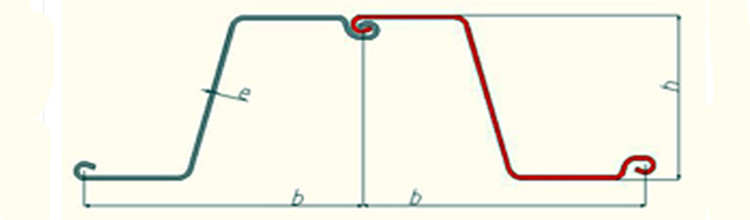
Specifications
Section | Width | Height | Thickness | Sectional | Mass | Section | Moment of | |
B mm | H mm | T mm | cm2/m | kg/m Single | kg/m2 of | cm3/m | cm4/m | |
0Z Sections | ||||||||
OZ26 | 675 | 429 | 10.5 | 181.0 | 95.9 | 142.1 | 2620 | 57410 |
OZ27 | 675 | 429 | 11.0 | 188.3 | 99.8 | 147.9 | 2730 | 60043 |
OZ28A | 675 | 429 | 11.5 | 197.0 | 104.4 | 154.6 | 2850 | 62667 |
OZ29A | 675 | 429 | 12.0 | 205.5 | 108.9 | 161.3 | 2960 | 65281 |
OZ31A | 675 | 429 | 12.7 | 217.5 | 115.2 | 170.7 | 3120 | 68927 |
OZ32 | 675 | 476 | 11.0 | 204.4 | 108.3 | 160.5 | 3180 | 77367 |
OZ33 | 675 | 476 | 11.5 | 213.3 | 113.1 | 167.5 | 3320 | 80750 |
OZ34A | 675 | 476 | 12.0 | 222.4 | 117.8 | 174.6 | 3450 | 84121 |
OZ36 | 675 | 476 | 12.5 | 231.3 | 122.5 | 181.5 | 3580 | 87473 |
OZ37 | 675 | 476 | 13.0 | 240.1 | 127.3 | 188.5 | 3720 | 90830 |
OZ38A | 675 | 476 | 13.5 | 249.0 | 132.0 | 195.5 | 3850 | 94167 |
OZ40 | 675 | 476 | 14.0 | 257.9 | 136.6 | 202.4 | 3980 | 97493 |
