- tyler@shipplate.com
- +86 15603721115
To fully understand the environmental impact of steel sheet piles, it is best to use a Life Cycle Assessment (LCA) framework, which evaluates impacts across the entire process—from raw material extraction to the end of the product's service life. Although steel production is an energy-intensive process, steel sheet piles demonstrate significant sustainability advantages due to their reusability, recyclability, and ongoing engineering optimization.
The following is a detailed analysis of their environmental impact at various stages of the life cycle:
1. Manufacturing Stage (Greatest Impact)
1) Embodied Carbon: The primary environmental impact of steel sheet piles (up to 97%) stems from the initial production process, largely due to the extraction and processing of iron ore.
2) Production Process is Crucial: Steel production can utilize either primary production methods (blast furnaces) or secondary/recycled production methods (electric arc furnaces). Secondary production using scrap steel is more environmentally friendly, as it relies on 100% scrap steel and eliminates the need to mine virgin iron ore or use coal.
3) Transportation: Transporting steel sheet piles from the manufacturer to the construction site has a relatively minor impact on the overall carbon footprint, typically accounting for only 2%–3% of the total environmental load.
2. Installation Stage
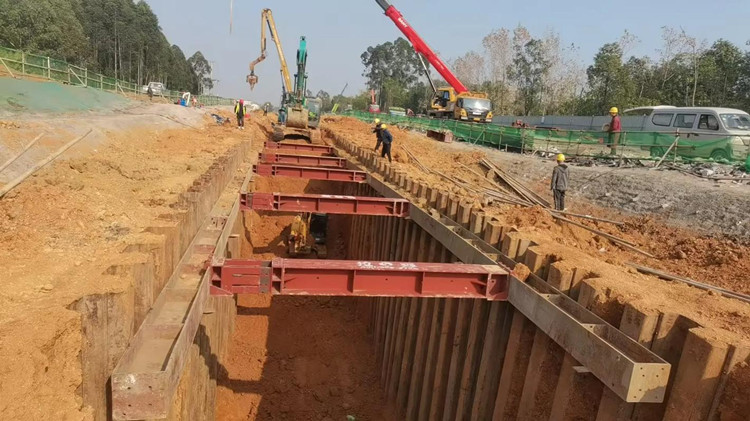
1) Soil Disturbance: Steel sheet piles are classified as "low-displacement piles," meaning the ground remains largely undisturbed after the piles are extracted; compared to other deep foundation construction methods, this approach minimizes soil disturbance.
2) Noise and Vibration: The installation process—particularly when using vibratory or impact driving—generates significant noise and ground vibration.
This can disrupt local ecosystems, especially in sensitive aquatic or urban environments; consequently, mitigation measures such as press-in piling techniques or noise barriers are often required.
3. Use Stage (Durability and Corrosion)
1) Service Life: Steel sheet piles are highly durable, with an expected service life of at least 125 years in inland environments—a key factor in their long-term sustainability.
2) Corrosion: The primary environmental concern during the use stage is corrosion, an electrochemical process in which the steel reacts with its surrounding environment. Compared to static water environments, corrosion rates are significantly higher in marine environments or areas subject to frequent tidal fluctuations. To address this, designers often incorporate a "corrosion allowance" (extra steel thickness)—which slightly increases initial material usage—or employ protective coatings, though the latter requires monitoring for potential leaching risks.
4. End-of-Life and Circular Economy (Key Advantages)
1) Reusability: For temporary works (such as cofferdams or trench shoring), steel sheet piles can be extracted and reused multiple times (often ten times or more), thereby substantially reducing the environmental impact of individual projects.
2) Recyclability: Steel boasts the highest global recycling rate. At the end of its service life, the material's magnetic properties allow sheet piles to be easily separated from other waste; they can then be repeatedly recycled in electric arc furnaces without any loss of quality.
5. Comparison with Alternatives
1) Versus Concrete: Recent sustainability assessments indicate that, within certain height ranges, concrete sheet piles may have lower embodied carbon emissions and total costs than comparable steel sheet piles.
However, concrete is often difficult to recycle at the end of its life cycle, whereas steel excels in circularity and recyclability.
2) Versus Vinyl/Composite Materials: Some "cradle-to-site" studies suggest that, in specific scenarios, vinyl sheet piles may have a lower initial environmental impact.
Nevertheless, thanks to its superior structural strength, durability, and infinite recyclability, steel often demonstrates better sustainability performance across multiple life cycles.
6. Best Practices for Mitigating Environmental Impact
1) Specifying Low-Carbon Steel: Require suppliers to provide Environmental Product Declarations (EPDs) and prioritize steel produced using renewable energy and secondary smelting processes (utilizing scrap steel).
2) Using Reclaimed Steel Sheet Piles: Strategically using reclaimed steel sheet piles eliminates the need for new steel production, thereby significantly reducing the project's embodied carbon footprint. 3) Engineering optimization: Modern steel sheet pile profiles (such as those made from high-yield-strength steel) can weigh up to 50% less than traditional designs while meeting the same structural requirements, thereby directly reducing material consumption and associated carbon emissions.
In summary
Although the initial production of steel sheet piles generates a significant carbon footprint, their exceptional durability, high reusability in temporary works, and near-100% recyclability make them a highly sustainable choice for modern construction that aligns with circular economy principles.
