- tyler@shipplate.com
- +86 15603721115
Analysis of Causes of Steel Sheet Pile Leakage
1. Poor interlocking of the interlocking joints
Deformation of old steel sheet piles not corrected or deviations in pile driving verticality result in excessive interlocking gaps, leading to water seepage.
2. Improper treatment of pile joints in the channel
Joints not filled with sealing material, or the filler loses effectiveness due to erosion by water flow.
3. Complex geological conditions
High water pressure in sandy soil and quicksand layers increases the risk of leakage.
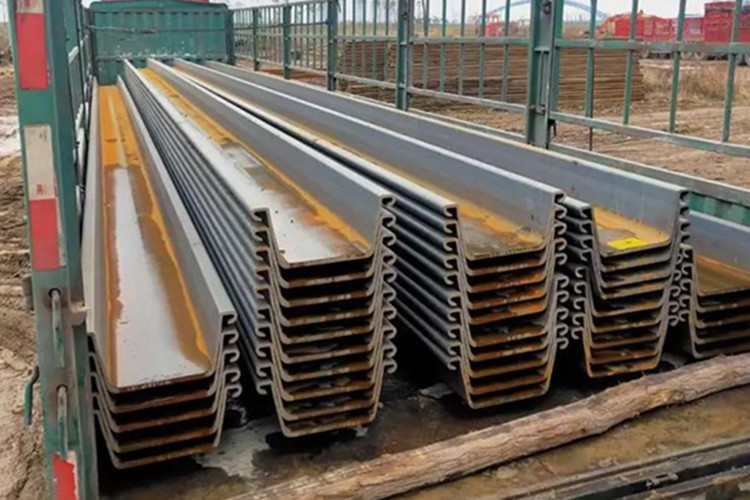
Preventative Measures for Steel Sheet Pile Leakage
Pre-construction Preparation
1. Correction of old piles
Correct bent and deformed steel sheet piles using hydraulic jacks or fire drying to ensure straight interlocking joints.
2. Purlin Support
Install guide frames to control pile driving verticality, with deviations required to be ≤0.5%.
Optimization of Pile Driving Techniques
1. Use the screen-type driving method
Drive piles in batches (e.g., drive piles 1/3/5 first, followed by piles 2/4) to reduce interlocking joint misalignment.
2. Corner Treatment
Use special-shaped corner piles or axis sealing to prevent leakage caused by welding deformation.
Methods for Treating Leaking Steel Sheet Piles
Minor Leaks (Gap ≤ 5mm)
1. Caulking Materials
Fill the joints with hemp root, butter, or fiber-rich cotton batting, supplemented with fly ash and sawdust, spread in the direction of the water flow.
2. Fine Sand Injection
Inject dry fine sand into the joints while pumping water, using water pressure to compact the gap.
Severe Leaks (Sand and Water Gushing)
1. Dual-Liquid Grouting
Use a valve pipe grouting system of water glass and cement slurry for rapid solidification and sealing.
2. External Reinforcement
Install a water-stop curtain or steel sheet pile reinforcement outside the leak.
