- tyler@shipplate.com
- +86 15603721115
The "most cost-effective" sheet pile doesn't refer to a single material, but rather the material that minimizes the total project cost.
Cost-effectiveness largely depends on whether the project is temporary or permanent, the excavation depth, and environmental conditions.
The following are the most cost-effective sheet pile options categorized by specific application scenarios:
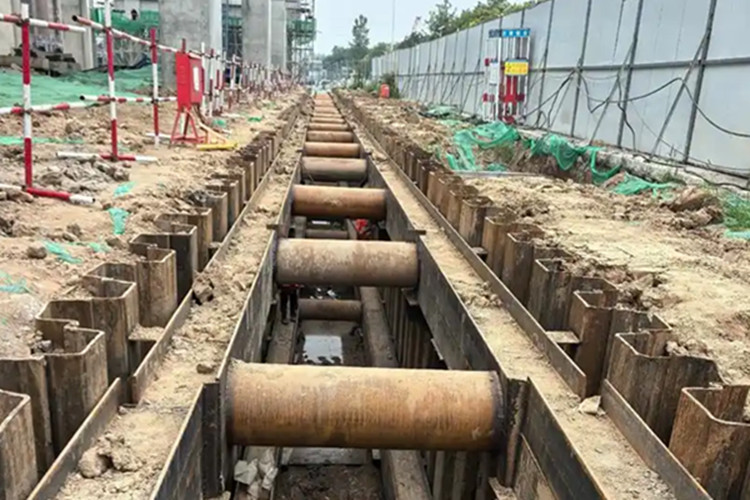
1. Heavy, Deep Excavation, and Structural Projects: Z-Type Sheet Piles
For deep excavation, heavy civil infrastructure, and high-load retaining walls, hot-rolled sheet piles are the mainstream and most cost-effective choice.
1) Z-Type vs. U-Type: Among sheet piles, Z-type sheet piles are generally considered the most efficient and economical pile type. Unlike U-type piles, the interlocking points of Z-type piles are located on the neutral axis, resulting in higher structural strength and section modulus.
2) Strength and Efficiency: Certain specifications of sheet piles, such as AZ-type sheet piles, are generally considered the most efficient and robust option on the market for heavy retaining works.
3) Temporary Works: For temporary retaining works (such as cofferdams), steel is highly cost-effective because it can be driven in, pulled out, reused, or leased without requiring a one-time purchase.
2. For Shallow Water, Marine, and Permanent Seawalls: PVC Sheet Piles
For shallow water retaining walls, breakwaters, and marine environments, PVC sheet piles are often the most cost-effective solution, especially when considering total life-cycle costs.
1) Initial Cost Savings: Purchasing PVC sheet piles directly can be up to five times cheaper than steel.
2) Installation Cost Savings: These materials weigh 40 times less per square meter than steel, significantly reducing transportation, handling, and equipment costs during installation.
3) Zero Maintenance: PVC sheet piles offer long-term cost-effectiveness because they are unaffected by rot, marine borers, and corrosion. Steel requires expensive protective coatings or cathodic protection in saltwater environments, while PVC sheet piles require no maintenance.
4) Limitations: Plastic sheet piles are only a fraction of the strength of steel, typically limiting their maximum retaining height to approximately 5 to 7 feet. 3. Key Factors Determining Cost-Effectiveness
To choose the most cost-effective option for your specific site, consider the following factors:
1) Retaining Height: If you require a retaining height exceeding 6 to 8 feet, steel is often the only viable structural option. For heights below 7 feet in soft soil, PVC sheet piles are much more economical.
2) Environment: In highly corrosive marine environments, the "hidden" costs of steel (corrosion protection and maintenance) may make vinyl or fiberglass reinforced polymer (FRP) more cost-effective over a 50-year lifespan.
3) Project Duration: If the wall is temporary (less than 2 years), leasing steel sheet piles is the most cost-effective method.
If the wall is permanent, purchasing steel with a suitable protective coating or constructing a shallow wall using vinyl materials will yield the best return on investment.
