- tyler@shipplate.com
- +86 15603721115
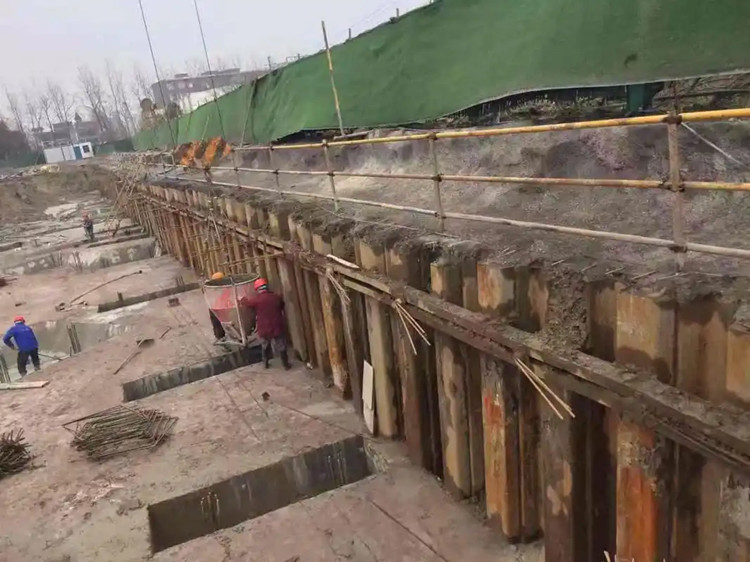
Sheet piles are primarily connected via interlocking (clamping) mechanisms. The built-in irregular edges of each sheet pile slide and engage with adjacent sheet piles, forming a continuous wall.
1. Interlocking Connection (Main Method)
1) Common Interlocking Types:
* Larssen Interlock: Hook-type double clamping, widely used in steel sheet piles.
* Ball-and-socket Interlock: Arc-shaped connection, suitable for arc-shaped or circular cofferdams.
* Tongue/finger-groove Interlock: The edge of one sheet pile slides into the mating groove of an adjacent sheet pile.
During installation, each new sheet pile slides vertically downwards along the interlocking points of the already driven sheet piles, and is then driven into the ground using a vibratory hammer or impact hammer.
2) Three Working States of Interlocking:
* Free Interlock: Simply snaps into place without additional fixing; allows slight relative movement between piles.
* Crimped Interlocking: The interlocking edges are mechanically crimped to transfer shear force, thereby improving structural rigidity.
* Welded Interlocking: Joints are continuously or intermittently welded to achieve complete shear force transfer and better watertightness.
2. Watertight Sealing Treatment
Minor gaps may still exist in basic interlocking systems. For water storage projects:
1) Apply asphalt/polyurethane sealant (pre-applied at the factory or applied on-site) to the inside of the interlocking system to prevent leakage.
2) Fully weld the interlocking joints to achieve complete watertightness for permanent cofferdams and cutoff walls.
3. Vertical Extension (Extended Piles)
When sheet piles require greater depth, the pile segments are connected end-to-end using full-strength butt welding, or bolted together on-site using splice plates.
