- tyler@shipplate.com
- +86 15603721115
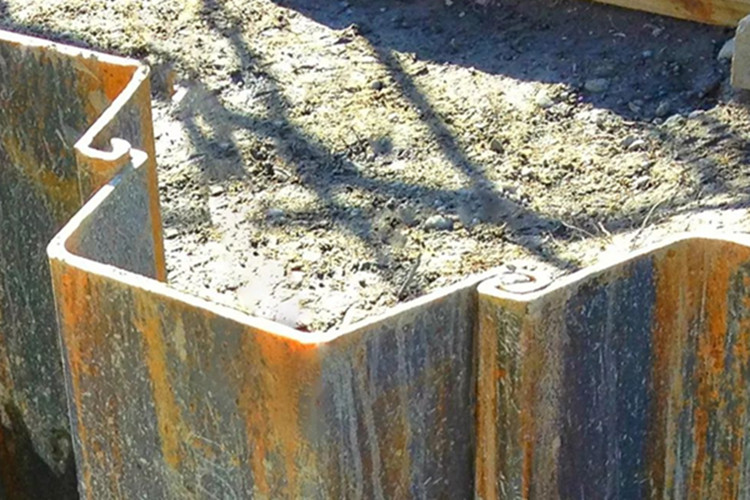
Temporary sheet piles are interconnected steel structures driven into the ground to form a continuous retaining wall, used for a limited time during a construction project.
Unlike permanent sheet piles, temporary sheet piles are designed to be removed and reused after their temporary purpose is fulfilled.
1. Main Uses
1) The primary purpose of temporary sheet piles is to provide retaining power for soil or water bodies to ensure the safety of the construction site and the integrity of the structure.
2) They can reinforce excavations, prevent soil subsidence, and protect workers and surrounding infrastructure from water or soil pressure during construction.
2. Common Applications
1) Excavation Support: Stabilizing the ground around deep foundations, basements, or utility trenches to ensure safe excavation and prevent slippage.
2) Cofferdams: Creating enclosed, drained working areas near or inside bodies of water, for projects such as bridge pier repair or marine structures.
3) Groundwater Control: Managing and guiding groundwater flow around the construction site to keep the work area dry and stable.
3. Installation Methods
Installation techniques depend on site-specific factors such as geological conditions, access, and environmental constraints (e.g., noise restrictions).
1) Vibratory Hammer: A fast and efficient piling method widely used, but may not be suitable near vibration-sensitive structures.
2) Silent Press-in (Hydraulic) Rigs: These rigs use static force to clamp and press the piles into the ground, making them ideal for minimizing noise and vibration near railways or existing buildings.
3) Excavator Mounting Attachments: Side-grip breakers mounted on excavators provide a flexible and convenient solution for restricted sites or small installation projects.
4. Removal and Reuse
1) Once the permanent underground structure (e.g., foundation or floor slab) is completed, temporary sheet piles can be extracted from the ground using specialized removal equipment.
2) Because temporary sheet piles can be driven and extracted multiple times in different projects, they are considered a cost-effective and environmentally friendly construction solution.
