- tyler@shipplate.com
- +86 15603721115
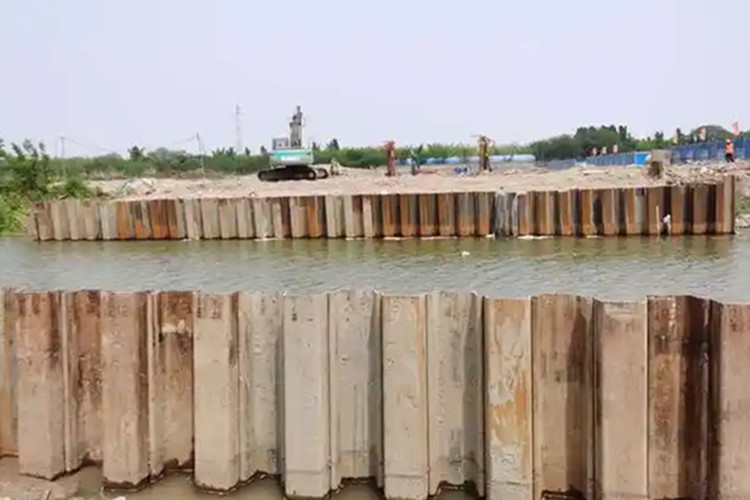
Steel sheet piles—structural steel sections featuring interlocking joints that form a continuous wall—are widely used in modern foundation and underground engineering. Overall, their advantages and disadvantages are characterized by the following aspects:
Advantages
1. Efficient and Convenient Construction
Steel sheet piles are prefabricated in factories and installed rapidly on-site using mechanized equipment. Compared to traditional cast-in-place concrete retaining walls, they significantly shorten construction time (by over 50% with certain methods) and require a smaller footprint, making them ideal for densely populated urban areas or emergency disaster relief projects.
2. Excellent Water-blocking and Soil-retaining Performance
The piles interlock tightly via edge connectors (such as Larssen-type interlocks) to form a continuous wall with high strength and rigidity. This structure effectively resists immense lateral soil and water pressures while providing excellent water-sealing and anti-seepage capabilities.
3. Eco-friendly and Cost-effective
Steel is a highly recyclable material. In temporary shoring projects, the piles can be extracted and reused after the work is completed (typically 20 to 30 times). This not only lowers project costs but also significantly reduces the volume of earth excavation and concrete usage, thereby conserving land resources.
4. High Adaptability
Steel sheet piles adapt well to various geological conditions (such as sandy soil, clay, and soft ground) and are not restricted by hydrological conditions, allowing for installation in deep water or areas with high groundwater levels. Additionally, they can be combined with materials like steel pipe piles or H-beams to create more stable composite shoring structures.
Disadvantages
1. Relatively Low Rigidity and Significant Deformation
Compared to bored piles or diaphragm walls, steel sheet piles possess lower flexural rigidity. Following deep excavation, the wall is prone to significant deformation. Consequently, in soft soil layers, multiple levels of internal bracing or ground anchors are often required to ensure stability; they are generally suitable for excavations not exceeding 7 meters in depth.
2. Construction Noise and Vibration Disturbance
Driving steel sheet piles into hard soil or gravelly soil using traditional vibratory or impact hammers generates significant noise and intense vibration. This may adversely affect the foundations of nearby buildings, underground utilities, and the daily lives of residents.
3. Construction constraints under complex geological conditions
In challenging geological conditions—such as those containing large boulders, hard rock strata, or cobble layers—it is often difficult to drive steel sheet piles to the required depth; forcing the installation can easily cause the piles to tilt or even damage the pile heads.
4. Difficulties in pile extraction and subsequent remediation
Steel sheet piles driven into dense sand or hard soil may prove difficult to extract later, requiring additional technical expertise and equipment. Furthermore, the extraction process disturbs the surrounding soil; if the resulting voids are not promptly backfilled with grout, ground subsidence may occur.
5. Risk of water leakage
Although steel sheet piles generally offer good watertightness, localized leakage can occur if the piles tilt or the interlocks fail to engage tightly during installation. For projects with stringent waterproofing requirements, supplementary measures—such as water-stop curtains—are necessary.
