- tyler@shipplate.com
- +86 15603721115
Steel sheet piles are highly regarded in the engineering industry, largely due to their significant green and environmentally friendly attributes. Compared to traditional cast-in-place concrete retaining walls or bored piles, their environmental advantages are mainly reflected in the following aspects:
1. Extremely high reusability (core advantage)
As a temporary support structure, steel sheet piles can be completely extracted and reused after construction. Typically, they can be recycled 20 to 30 times or more. This "leasing"-like recycling model significantly reduces steel consumption and construction waste generation, perfectly aligning with the concept of a circular economy.
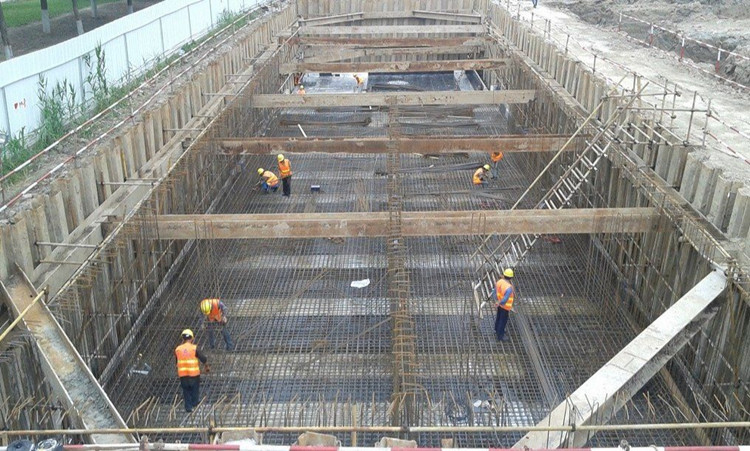
2. Significantly reduced earthwork excavation and transportation
The cross-sectional dimensions of steel sheet piles are very compact, requiring minimal construction space to achieve high-strength support. This means that the foundation pit can be excavated vertically, without the need for a large working face as with traditional slope excavation. This not only preserves the original topography and vegetation to the greatest extent possible but also greatly reduces the amount of excess earthwork excavated, thereby reducing dust pollution and exhaust emissions from dump truck transportation.
3. Avoids Mud Pollution and Groundwater Damage
Traditional bored piles require large amounts of mud for wall protection during construction, which not only easily overflows and causes serious mud and water pollution but also disturbs surrounding groundwater resources. Steel sheet piles, on the other hand, use purely mechanical driving or static pressure processes, with entirely dry operations, producing no waste mud and causing zero pollution to the groundwater environment.
4. Reduces Carbon Emissions and Resource Consumption
Due to the excellent mechanical properties of steel sheet piles, the weight of steel consumed to achieve the same support strength is far less than other steel or concrete components. Furthermore, because they are prefabricated in the factory and directly assembled on-site, they eliminate the need for timber formwork and large amounts of cement required for on-site pouring, reducing the overall carbon footprint of building materials from the source.
5. Excellent Soil Isolation and Leakage Prevention Functions
In environmental remediation projects, the tight interlocking of steel sheet piles forms a robust vertical physical barrier. It can be used as a cutoff wall to effectively prevent contaminated soil or groundwater from spreading to surrounding clean areas; in landfill redevelopment or land reclamation projects, it can also prevent secondary leakage of hazardous substances.
6. Noise and Vibration Reduction
Noise and Vibration Control In addition to conventional vibratory hammers, modern construction increasingly uses static pile driving technology. Steel sheet piles are completely noiseless and vibration-free, protecting the surrounding ecological environment (such as bird habitats) and avoiding the risk of damage to nearby building foundations and underground pipelines caused by strong vibrations.
