- tyler@shipplate.com
- +86 15603721115
Steel sheet piles can be classified primarily based on their manufacturing process and cross-sectional shape. The following is a detailed classification analysis:
Classification by Manufacturing Process
Based on different manufacturing processes, steel sheet piles are mainly divided into two categories:
1. Hot-rolled steel sheet piles: These are formed by multiple rolling passes of steel billets at high temperatures to achieve the required cross-section and interlocking structure. Due to their excellent mechanical properties, large section modulus, high durability, and high reusability, they have long held a dominant position in the international engineering field.
2. Cold-formed thin-walled steel sheet piles: These use relatively thin plates (commonly 8mm to 14mm thick) and are continuously rolled into shape in a cold-forming unit. Their production cost is lower, and length control is flexible, but the water-stopping effect at the interlocking area is relatively weak, resulting in a narrower application range; they are mostly used as a supplementary engineering material.
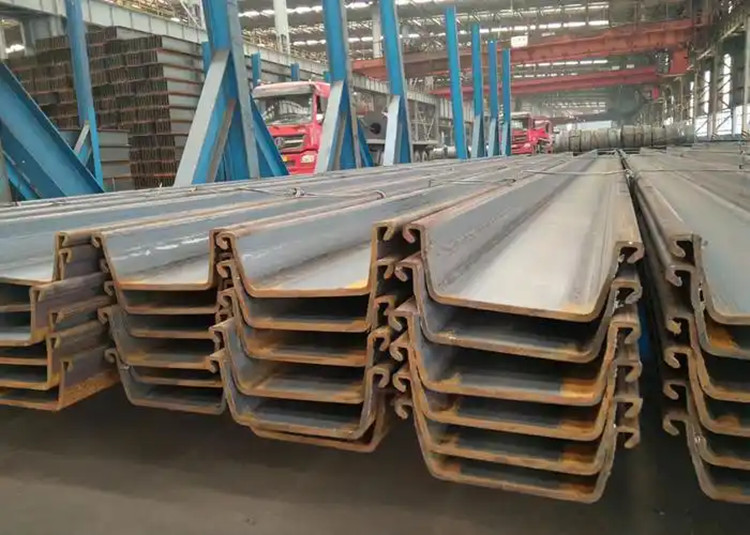
Classification by Cross-sectional Shape
Based on different stress characteristics and construction requirements, common cross-sectional types include the following:
1. U-shaped steel sheet piles: The cross-section is U-shaped, with the interlocking located near the neutral axis. 1. Form-type sheet piles: After assembly, they form stable and symmetrical walls, offering excellent versatility and enclosure properties. They are the most widely used type, suitable for both temporary and permanent structures.
2. Z-type steel sheet piles: These have a Z-shaped cross-section with interlocks located at the edge. They offer higher section efficiency and excellent bending resistance, making them particularly suitable for bearing large lateral earth pressures. They are commonly used in heavy engineering projects such as ports and hydraulic structures.
3. Straight web (flat plate) steel sheet piles: These have a relatively straight or slightly curved cross-section and are equipped with high-strength interlocks. They offer good waterproofing and axial stress resistance, primarily used in circular or honeycomb structures, relying on their overall geometry to maintain stability.
4. H-type steel sheet piles: These have an "H"-shaped cross-section, providing a larger cross-sectional area and enhanced bending stiffness and shear resistance. They are commonly used in support structures for foundation pits, trenches, and bridge excavations.
5. Combi Wall: Composed of large-diameter main piles and steel sheet pile infill slabs, offering extremely high overall rigidity and load-bearing capacity. Specifically designed for marine and port engineering projects with complex conditions and stringent stress requirements.
6. Other Special Types: These include vertical angle steel sheet piles (L-shaped or T-shaped), tubular steel sheet piles, and AS-type steel sheet piles, designed for specific engineering needs such as seismic resistance, compressive strength, or particular marine protection.
