- tyler@shipplate.com
- +86 15603721115
Driving steel sheet piles into the ground is an engineering project requiring specialized machinery and meticulous procedures. Depending on geological conditions and construction requirements, there are several common driving methods:
1. Vibratory Piling Method (Most Common)
This is currently the most widely used piling method. Construction workers use a vibratory hammer equipped with a hydraulic or electric vibrator to clamp the top of the steel sheet pile. Once the machine is started, it generates high-frequency vibrations. These vibrations quickly break down the friction between soil particles, causing the soil to temporarily become liquid-like (liquefaction). At this point, the steel sheet pile, under the combined action of its own weight and the vibration force, can smoothly and quickly slide into the ground. This method is highly efficient and relatively quiet, making it particularly suitable for soft soils such as sandy soil and silty soil.
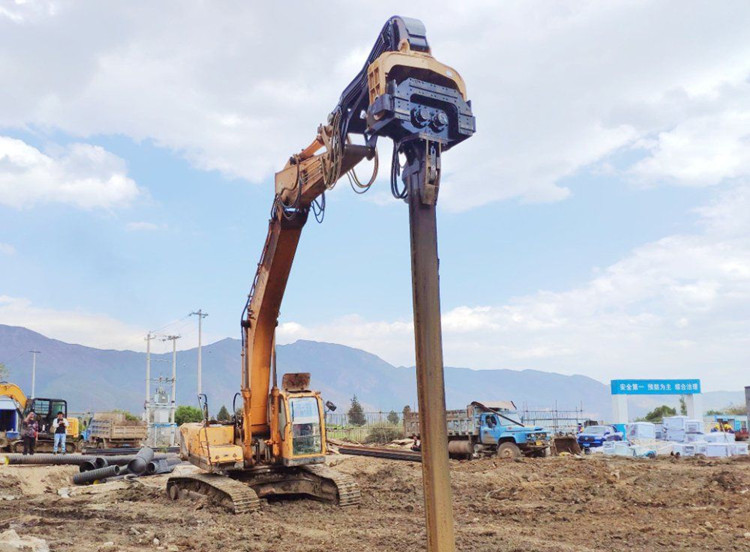
2. Impact Hammer Method
When encountering harder strata, gravelly soil, or geology containing a small amount of weathered rock, vibration alone may not be sufficient for penetration. At this point, a crawler crane is used to suspend a diesel or hydraulic hammer, forcibly driving the sheet piles into the ground using gravity or explosive force, much like driving nails. To prevent damage to the interlocking joint at the top of the steel sheet pile under strong impact, a special steel "pile cap" is usually installed on top of the pile as a buffer and protection.
3. Static Pressure Pile Driving Method
In urban centers or areas with strict restrictions on noise and vibration (such as near hospitals or precision instrument factories), static pressure pile drivers are typically used. They utilize a hydraulic system to generate enormous vertical downward pressure, smoothly "pressing" the sheet piles into the soil. This method is completely noiseless and vibration-free, but the equipment is large and requires a certain bearing capacity from the foundation.
4. Auxiliary Methods (For Complex Geological Formations)
If encountering extremely hard clay layers, dense sand layers, or even shallow rock, direct driving can be very difficult and may even cause the pile to bend and deform. Pre-treatment is necessary at this stage: for example, using a auger drill to create a guide hole at the predetermined location, or using a high-pressure water jet to soften the soil (water flushing method), before driving the steel sheet piles in smoothly using the methods described above.
Special Note:
In practice, to ensure the flatness and structural safety of the entire wall, a "screen-style driving method" is usually adopted. This involves first inserting several steel sheet piles into the soil as positioning benchmarks, then driving adjacent piles in alternately, like building blocks. This effectively prevents the piles from tilting and ensures a tight, leak-proof interlocking joint.
