- tyler@shipplate.com
- +86 15603721115
What are Steel Sheet Piles?
Steel sheet pile engineering involves driving long, interlocking steel sheets (such as Larsen sheet piles) into the ground to form a continuous barrier. These barriers can be used for a variety of purposes, including retaining soil or water, preventing erosion, and building foundations for bridges, seawalls, and cofferdams.
Furthermore, the overlapping, interlocking edge design of steel sheet piles allows for seamless connections, forming a tight and durable wall that can withstand enormous pressure from soil or water. This is one of the reasons why steel sheet piles are widely used in construction projects requiring high strength and long-term support.
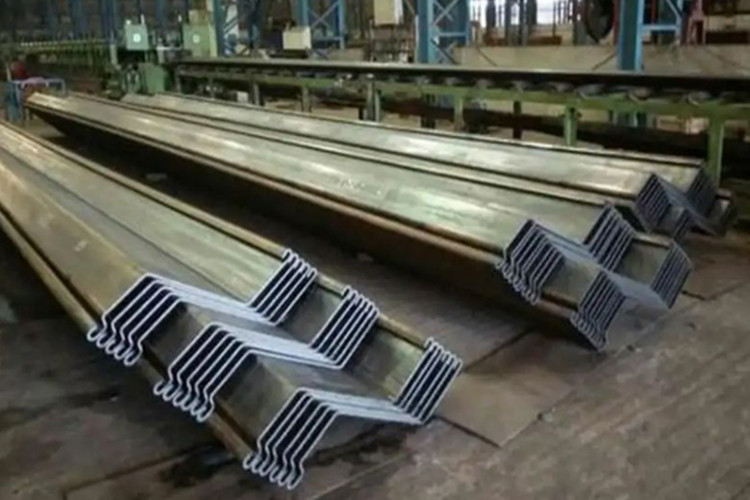
Types of Steel Sheet Piles
Steel sheet piles are used in a wide range of applications, and therefore come in various forms, including different shapes and sizes. Here are some of the most common types:
1. U-Shaped Steel Sheet Piles (Cold-Rolled/Hot-Rolled)
U-shaped steel sheet piles are commonly used in small to medium-sized engineering projects. Their typically wider surface area reduces installation time, improves waterproofing, and lowers costs. U-shaped sheet piles are available in various lengths and cross-sectional specifications, and are available in both cold-rolled and hot-rolled forms. Cold-rolled steel sheet piles are typically used for light applications such as retaining walls or small flood control projects, while hot-rolled sheet piles offer higher strength and are a better choice for heavy engineering projects requiring greater strength, such as dock construction. Due to their versatility, U-shaped sheet piles are a reliable choice for both small and large projects, providing the strength and stability required for construction.
2. Z-shaped steel sheet piles (cold-rolled/hot-rolled)
Z-shaped piles are ideal for engineering projects with high load-bearing capacity requirements, such as docks and waterfront areas. Z-shaped piles can be manufactured using cold-rolling or hot-rolling processes, and have high section modulus and bending stiffness. Hot-rolled Z-shaped piles are typically used in marine engineering projects with high strength requirements, such as deep foundations and ports. Cold-rolled Z-shaped piles are often used in light engineering projects with lower load-bearing capacity but lower bending performance requirements. The excellent strength-to-weight ratio of Z-shaped piles gives them greater resistance to deformation during construction and improves structural integrity, making them suitable for various construction depths and application scenarios.
3. Straight-web Steel Sheet Pile
Straight-web steel sheet piles are suitable for special engineering projects requiring high horizontal resistance, such as cofferdams or retaining walls. Designed to resist lateral compressive stresses rather than vertical loads, straight-web steel sheet piles are ideal for projects where horizontal tension is the primary consideration. Their vertical shaft ensures stability under high stress environments, and their design helps overcome structural challenges such as uneven load distribution.
4. Ω-shaped Steel Sheet Pile
Ω-shaped piles are best suited for small-scale excavation projects with limited space. Their lightweight design and easier, faster installation make them ideal for temporary structures. They are particularly suitable for urban projects or temporary applications with limited space and requiring rapid installation. Ω-shaped steel sheet piles are often the preferred choice when load-bearing capacity requirements are not high.
