- tyler@shipplate.com
- +86 15603721115
1. How to Install Steel Sheet Piles?
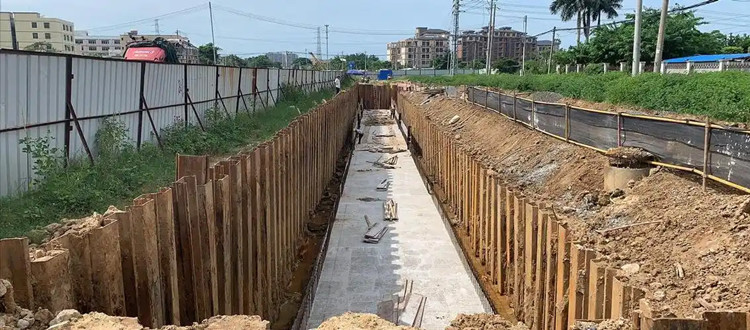
To fully utilize the performance of a steel sheet pile structure, the sheet piles must be driven to the depth specified by the wall designer. This can be achieved using various methods—vibratory hammers, impact hammers, or, if noise and vibration reduction is required, silent presses. All purchased sheet piles come with corner pieces and connectors to allow the wall to be constructed according to the lines in the design drawings.
In most cases, some preparatory work is required before starting the construction of a steel sheet pile structure. In fact, many sites require excavation. This preparatory work must be completed first to facilitate construction, the installation of anchor bolts, or ultimately, terrain alteration.
2. Step-by-Step Installation Process
After the preparatory work is completed, the installation of the steel sheet piles can be carried out in the following steps:
1) To build a straight wall, it is strongly recommended to use a temporary guide device. Setting up a guide device before installation determines the precise position of the wall and provides a support surface for easy piling, thus ensuring that the sheet piles remain vertical.
2) Before starting, the orientation of the sheets needs to be considered in advance. First, the most common driving method is to drive the male sheet pile in first. This is because female sheet piles tend to accumulate soil, hindering driving, so the female sheet pile should be used as the leading edge.
3) Lay the sheet piles in sections and check that they interlock correctly.
4) According to the design requirements, hammer the first sheet pile into the specified depth. You can mark the required driving depth on the sheet pile to ensure sufficient penetration.
5) A vibratory hammer can be used during installation, but if the soil is hard or dense, reducing penetration, an impact hammer can be used.
6) If vibration is prohibited at the construction site, a hydraulic device can be used to push the sheet pile into place.
7) After the first sheet pile is in place, hammer the second sheet pile into its interlocking position with the first sheet pile.
8) Regardless of the type of steel sheet pile you purchase, matching corner fittings can be used. These corner fittings are available in various sizes. The installation method is the same as for sheet piles.
9) Alternatively, you can thread the corner fitting through the front lock of the last steel sheet pile to be driven in, and then nail the sheet pile and corner fitting together. 10) After confirming the corner brackets are correctly positioned, use the male locks and guide rails of the corner brackets to align with the next square and install it in place. Once the square is correctly positioned, secure it to the guide rails.
11) Repeat this process until the wall is completed.
12) If the wall requires a complex shape, use connectors to maintain the integrity of the wall.
3. How deep can steel sheet piles be buried?
Let's look at a case study. Hanzi Steel initiated a project in June 2002 to replace the steel sheet piles at the Jefferson Ferry Terminal in New York State. The terminal was approximately 300 feet long and 80 feet wide. The original wooden structure was about a century old and had undergone at least two frame reconstructions, the most recent being in the late 1980s.
A steel breakwater connected to one end of the terminal on the land side. The required pile lengths around the terminal ranged from approximately 50 to 90 feet at the deepest point of the terminal. The steel sheet piles installed in the 1980s had aged and deteriorated in many places.
These new sheet piles, 0.625 inches thick, are expected to have a lifespan of 50 to 60 years. This is the first project undertaken by Hanzi Steel that requires two layers of high-rise sheet piles. Six semi-trailers were needed just to transport these sheets. The longest sheet piles required for the project weighed eight tons per pair. Specialized extended trailers could transport two pairs of sheet piles to the site at a time.
The Hanzi Steel team removed the old sheet piles around the dock. Approximately 40 meters of old piles were removed and replaced each time; the formwork used to keep the structure aligned during this process was 40 feet long. Typically, the excavation, removal, and installation of the new 40-foot-long old piles takes two to three days, depending on seabed conditions; obstacles can significantly extend the construction time.
Because installing the new piles requires more power, the company rented a Model 50B vibratory hammer to drive piles 90 feet deep into the soil conditions of the dock. Sometimes, during the removal of old piles, some existing structure would move into the construction path of the new piles. This required divers to clear the obstacles underwater.
